TECHNOLOGY
We brought the lab
into the clinic.
Most chronic pain clinics run on three modalities · a TENS unit, an ultrasound head, and a foam roller. We run on more than fifty. Seven of those are core to every patient's program. The rest are deployed by indication.
Every instrument on this page is FDA-cleared, peer-reviewed, and operated by a credentialed clinician. We do not run experimental devices on patients. We do not put you on a machine and walk away. Every modality has a target, a measurement, and a clinical rationale.
THREE JOBS · MEASUREMENT, MODULATION, PROOF
Hands are not enough for chronic pain. Technology lets us see, change, and prove what is happening.
A chiropractor with skilled hands can move a joint. A physical therapist can guide a movement. A massage therapist can release a knot. None of those things, on their own, change the central nervous system that has been amplifying your pain for years.
Technology does three things for us that hands cannot. It measures what is happening at the brain, nervous system, and structural level. It modulates the brain and nervous system directly with light, electricity, and graded sensory input. And it provides proof · the same instrument that found the driver shows that the driver has changed.
THE PRINCIPLE
Every modality earns its slot
We do not run a device because we own it. We run a device because the literature and the patient's scores say it is the right tool for the job. Modalities are added and removed by indication, every phase gate.
THE CORE STACK
Seven instruments. Every patient will see at least five of them in the twelve weeks.
Each card below lists the device, what it is and what it does, which IPS domain it touches, what the patient experiences during use, and one peer-reviewed citation. The developer should render each as a self-contained card with a colored accent rail. Citations should be linked when DOIs are available.
TIER 1 · LIGHT
Erchonia Low-Level Laser Therapy · FX405 · GVL/XLR8 · Zerona
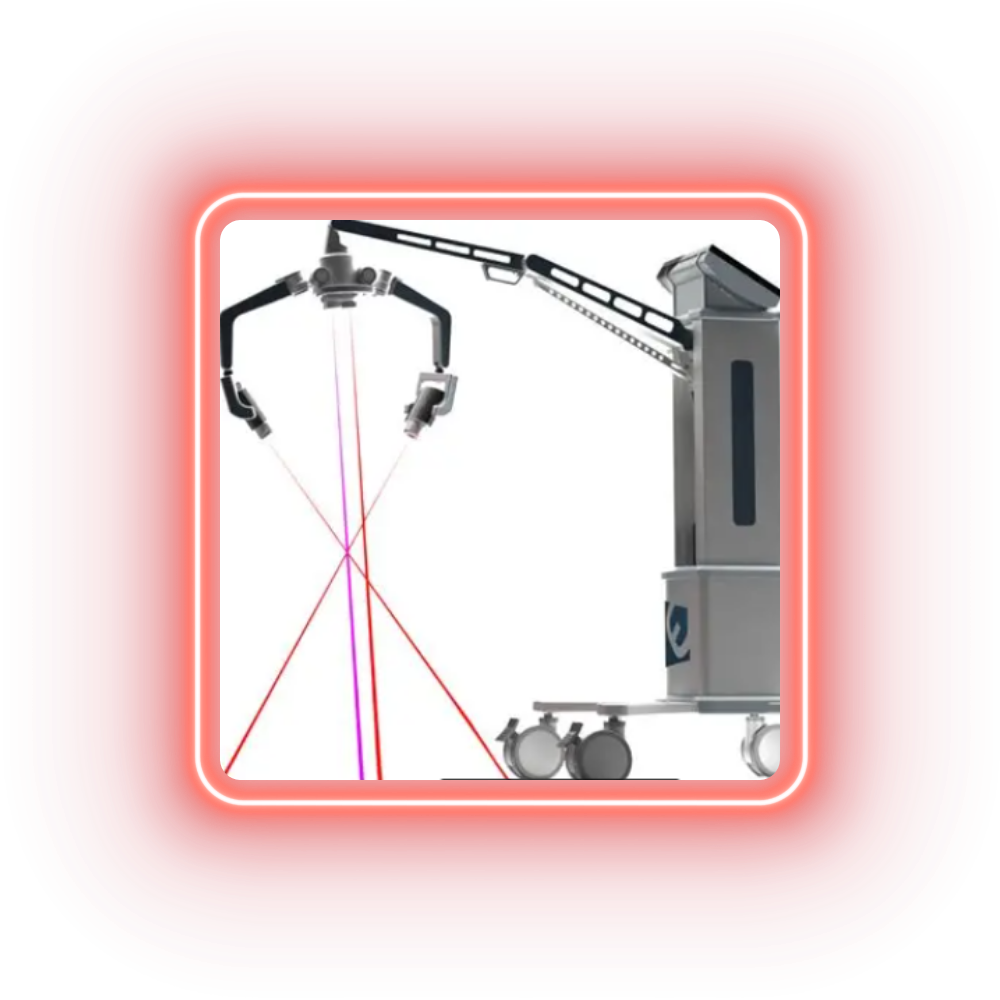
What it is · Erchonia builds the FDA-cleared low-level (cold) laser systems we use most. The FX405 is our targeted hand-held unit, the GVL/XLR8 is our base-station scanner, and the Zerona delivers wide-field 635 nm therapy.
What it does · Drives photobiomodulation at the cellular level · increases mitochondrial ATP production, reduces local inflammatory cytokines, and accelerates tissue repair. Used at every musculoskeletal pain driver in the program. IPS domains touched · DMS (tissue) · MPS (movement quality after pain reduction).
What the patient experiences · A small handheld device passed over the area, or a fixed scanner overhead. No heat, no sensation, no discharge. Sessions run 8 to 15 minutes.
Citation · Sammons, J. (2020). Erchonia 635 nm low-level laser therapy in chronic musculoskeletal pain. Orthopedics & Rheumatology Open Access Journal. doi:10.19080/oroaj.2020.17.555960
TIER 1 · MECHANICAL
Storz Shockwave · MP100
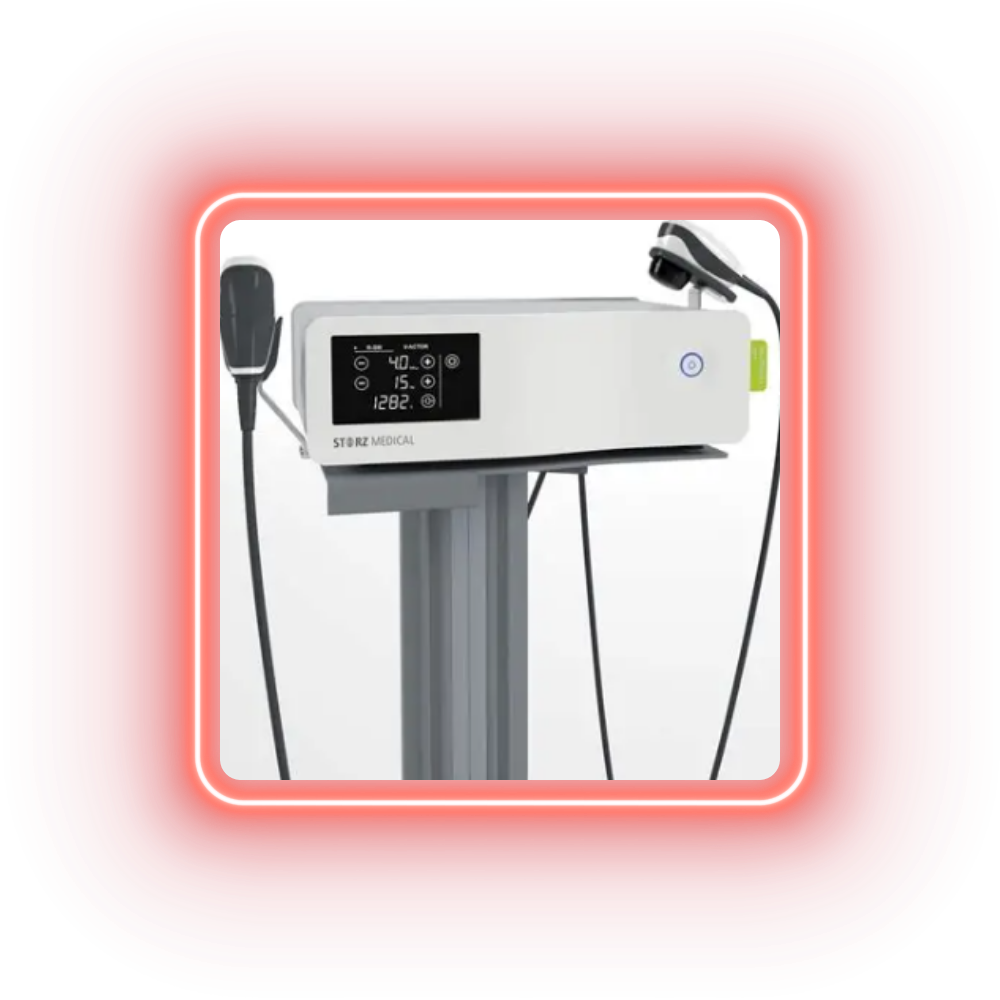
What it is · A radial extracorporeal shockwave therapy (ESWT) device that delivers acoustic pressure waves into stalled soft tissue.
What it does · Mechanically restarts the healing cascade in tissue that has been stuck in chronic inflammation. Used for plantar fasciitis, calcific tendinopathy, recalcitrant trigger points, and chronic low back pain that has stopped responding to lower-energy modalities. IPS domains touched · DMS (tissue) · MPS (when stalled tissue is restricting movement).
What the patient experiences · A wand pressed onto the skin delivering a rapid pulsing pressure. Treatments are short (5 to 8 minutes per area) and can feel intense at the highest settings. Briefly uncomfortable, well-tolerated, no downtime.
Citation · Liu, T., et al. (2023). Extracorporeal shockwave therapy for the treatment of chronic low back pain: a systematic review and meta-analysis. Journal of Orthopaedic Surgery and Research. doi:10.1186/s13018-023-03943-x
TIER 1 · ELECTRICAL
Neubie · Neuromuscular Re-Education
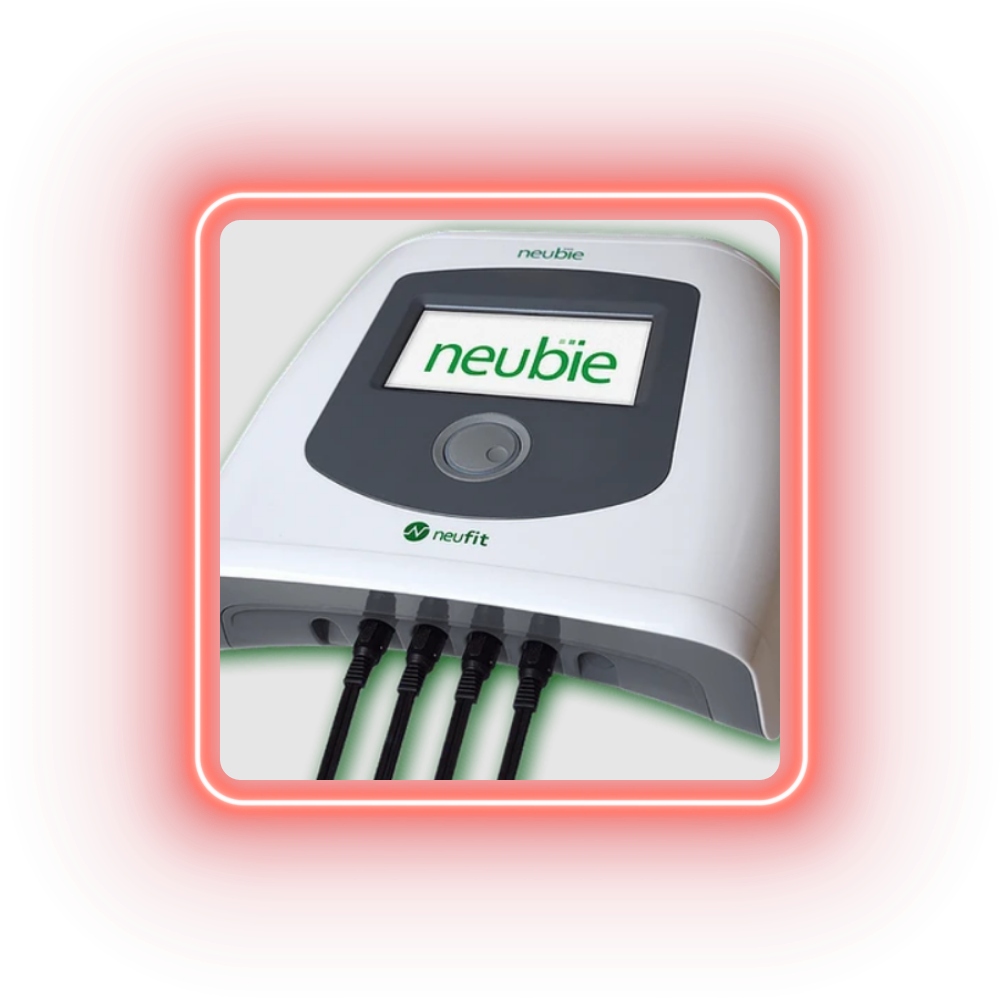
What it is · An FDA-cleared direct-current neuromuscular electrical stimulation device that bypasses guarded muscle patterns and restores motor control.
What it does · Re-establishes the brain-to-muscle signal in tissue that has been protectively shut down. Used in Phase 2 to rebuild glute activation, deep stabilizer recruitment, and movement pattern integrity after chronic compensation. IPS domains touched · MPS (movement) · NCS (motor control side of the nervous system).
What the patient experiences · Adhesive pads placed over target muscle groups while the patient performs a guided movement. The sensation is a deep activating contraction, not a tingling buzz. Sessions run 20 to 30 minutes.
Citation · Knutson, J. S., et al. (2015). Neuromuscular electrical stimulation for motor restoration in hemiplegia. Physical Medicine and Rehabilitation Clinics of North America. doi:10.1016/j.pmr.2015.06.002
TIER 1 · BRAIN
Transcranial Photobiomodulation · NIR Helmet
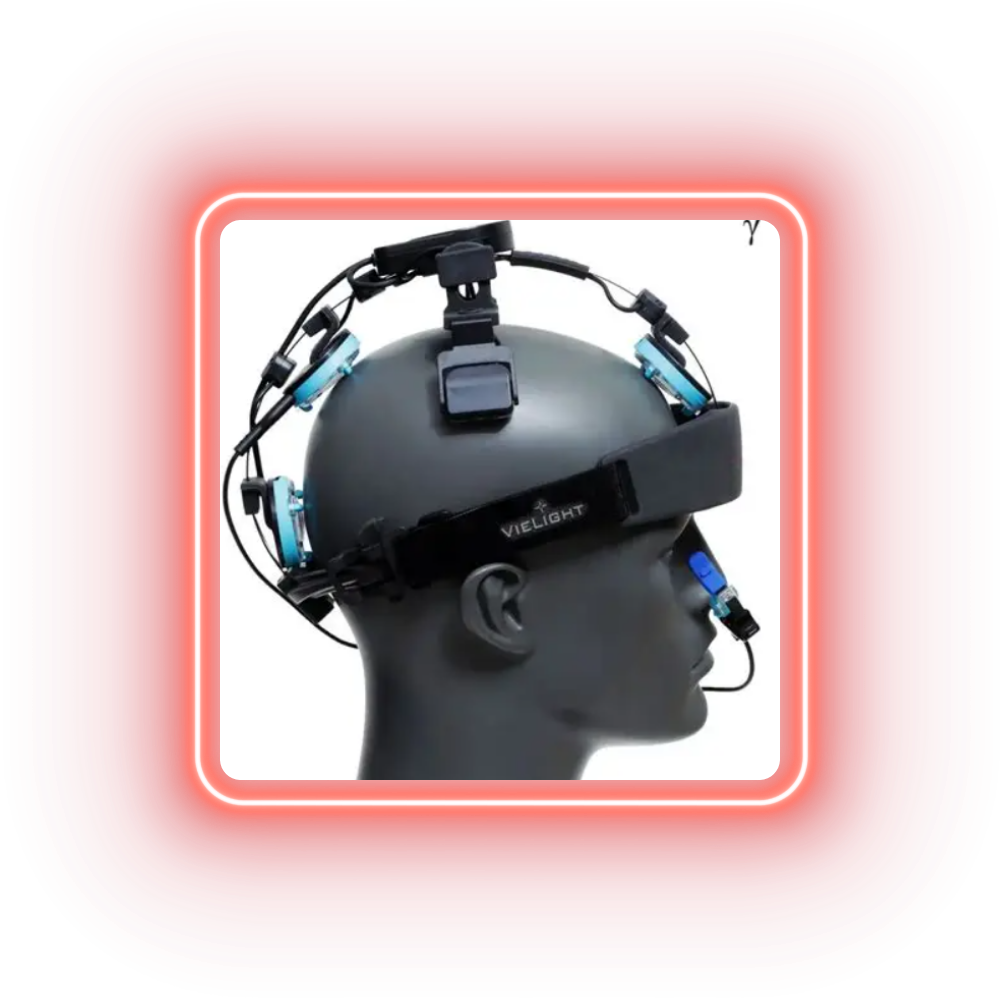
What it is · A near-infrared (NIR) helmet that delivers light to the cortex through the skull, driving cellular changes in cortical neurons.
What it does · Increases mitochondrial function and cerebral blood flow in the cortex, calms central pain amplification networks, and supports the brain-quieting goals of Phase 1. IPS domains touched · NCS (central nervous system) · FHS (sleep, mood, cognitive function).
What the patient experiences · The patient sits comfortably and wears the helmet for 15 to 20 minutes. No heat, no sensation, no discharge. Most patients describe a calm, settled feeling after sessions.
Citation · Hamblin, M. R. (2016). Shining light on the head: photobiomodulation for brain disorders. BBA Clinical. doi:10.1016/j.bbacli.2016.09.002
TIER 1 · VAGUS
Transcutaneous Vagus Nerve Stimulation · Pulsetto · Hoolest · VieLight
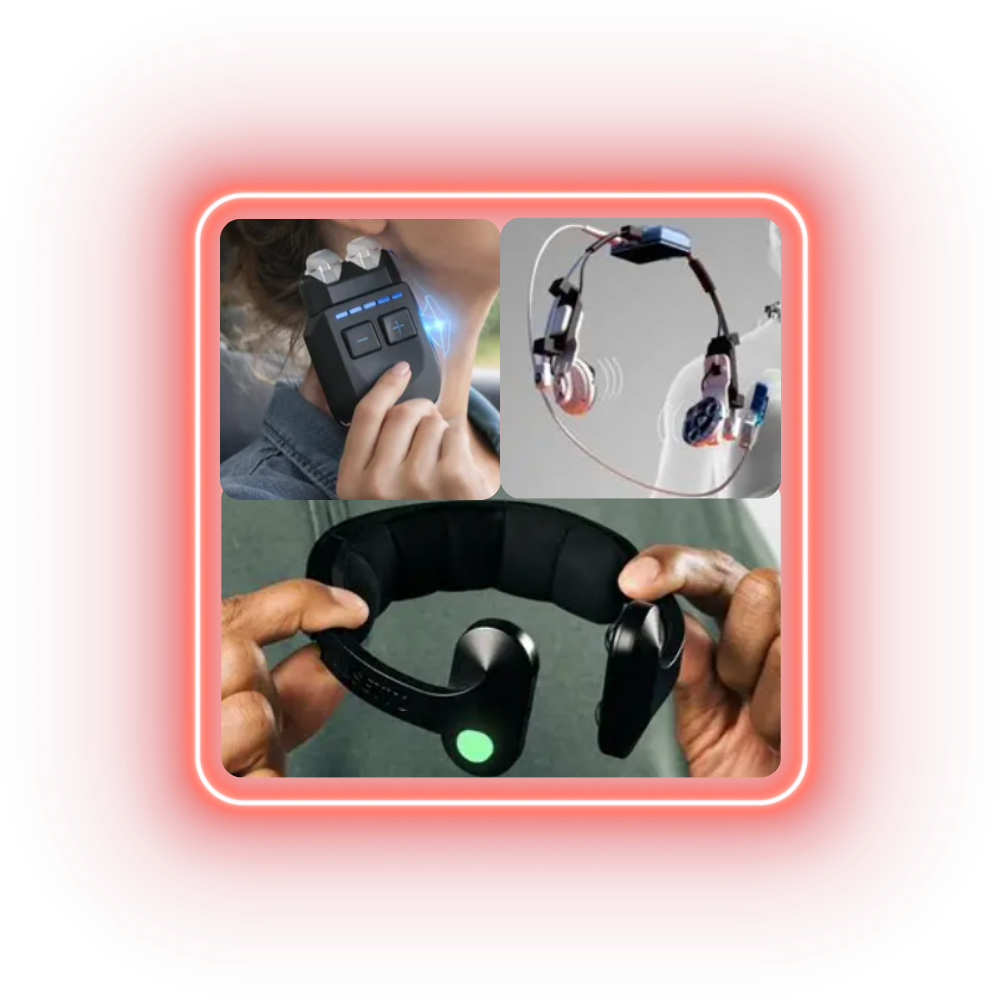
What it is · A small device that delivers a gentle electrical signal through the skin to a branch of the vagus nerve, either at the ear (auricular) or the side of the neck (cervical).
What it does · Drives the parasympathetic nervous system, raising heart rate variability and quieting the sympathetic "fight or flight" tone that is elevated in nearly every chronic pain patient. IPS domains touched · NCS (autonomic nervous system) · FHS (sleep, stress, digestion).
What the patient experiences · A small ear-clip or neck device worn for 10 to 20 minutes. The sensation is a mild buzz at the contact point. Most patients describe a calming, slower-breath effect during and after sessions.
Citation · Abd-Elsayed, A., et al. (2024). Auricular vagus nerve stimulation for chronic pain: a systematic review and meta-analysis. Pain and Therapy. doi:10.1007/s40122-024-00657-8
TIER 1 · MOVEMENT
Motion Guidance Laser · Visual Feedback Motor Control
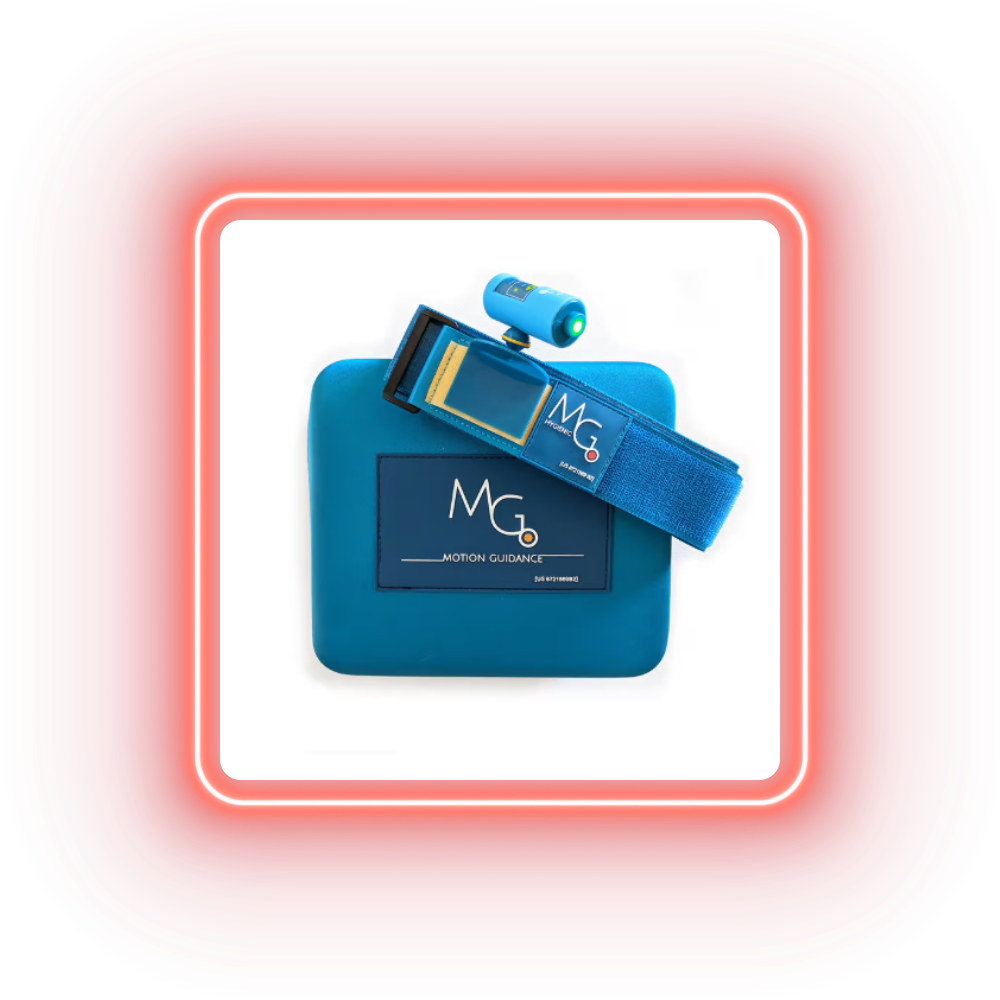
What it is · A small body-worn laser projector that gives the patient a real-time visual target while they move, so they can see (not just feel) what their body is doing.
What it does · Closes the visual feedback loop that is broken in chronic pain patients. Teaches precise motor control, joint position sense, and movement quality without verbal cueing. IPS domains touched · MPS (movement) · NCS (sensorimotor integration).
What the patient experiences · A small device clipped to the body projects a laser dot on the wall, ceiling, or target board. The patient moves to hit the target. Sessions are guided by the doctor and typically run 10 to 15 minutes.
Citation · Cerasa, A., et al. (2022). Visual feedback motor rehabilitation after total knee arthroplasty: a randomized controlled trial. Journal of Clinical Medicine. doi:10.3390/jcm11247355
TIER 1 · IMMERSIVE
Vive Focus Vision VR · XRHealth · Karuna Labs · Flowly
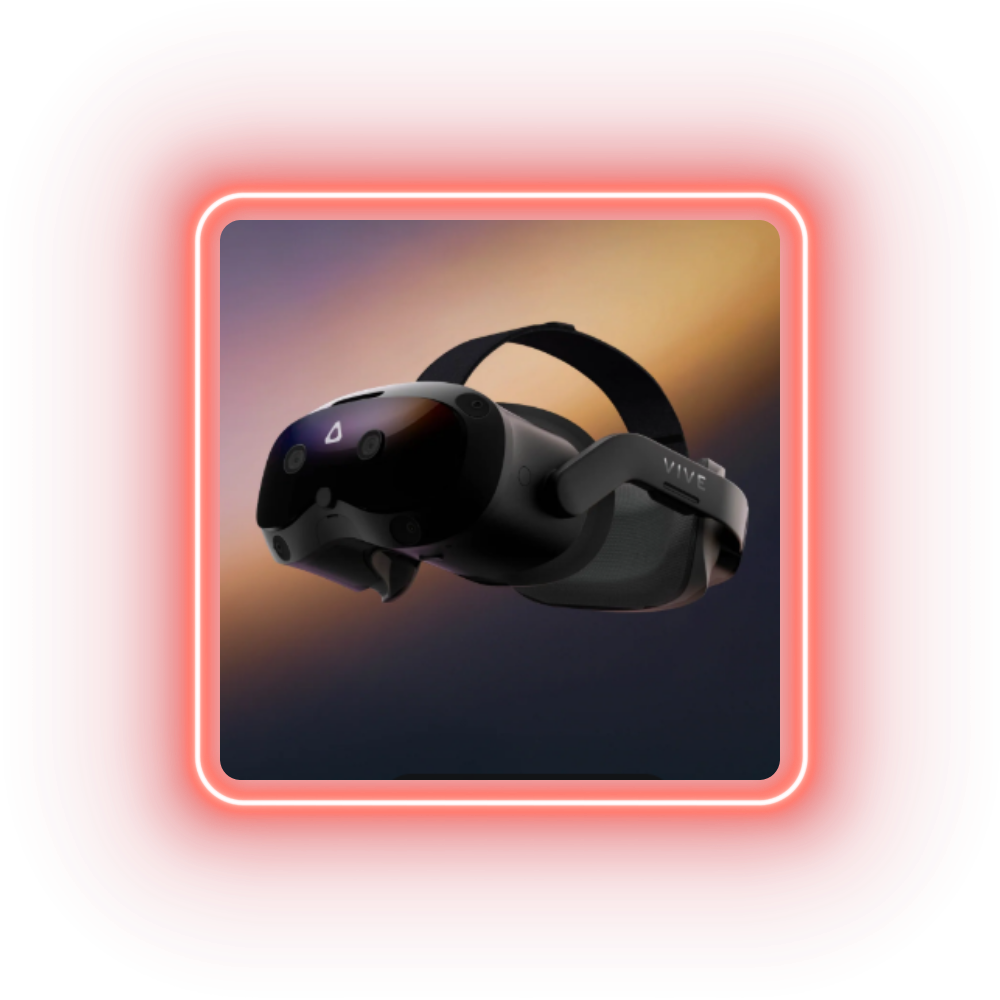
What it is · A clinical-grade VR headset paired with evidence-based chronic pain platforms · XRHealth (clinician-facing), Karuna Labs (pain reprocessing focused), and Flowly (biofeedback and breath training).
What it does · Delivers graded exposure to movement and environments the patient has learned to avoid, retrains pain prediction circuits, and pairs visual immersion with breath and autonomic regulation. IPS domains touched · NCS (central pain prediction) · MPS (graded exposure to feared movement) · FHS (anxiety, avoidance behavior).
What the patient experiences · A lightweight headset worn while seated or standing. Sessions are guided and last 10 to 25 minutes. Most patients describe the experience as calming and absorbing rather than disorienting.
Citation · Goudman, L., et al. (2022). Virtual reality for chronic pain management: a systematic review. JMIR Serious Games. doi:10.2196/34402
WHY WE COMBINE
Most clinics serialize. We stack.
A traditional clinic gives you one modality at a time · light this week, then add electricity next week if light did not work. That approach treats chronic pain like a single-pathway problem. It is not.
Chronic pain is multi-pathway. The brain is amplifying. The nervous system is stuck in fight-or-flight. The tissue is stalled. The movement pattern is guarded. Treating one pathway while leaving the others active is why most patients only get partial relief and slide back. We treat every active pathway in the same visit, in the same week, with stacked modalities chosen by the IPS sub-scores.
STACKING IN PRACTICE
Phase 1 stack example
In a typical Phase 1 visit, a patient may receive transcranial photobiomodulation (brain), vagus stimulation (autonomic), Erchonia LLLT (local tissue driver), and a guided breath protocol (autonomic) · in the same ninety minutes. Four pathways at once.
SUPPLEMENTS
Tissue, neuro, and inflammation support
A targeted stack built from our published supplement protocols · prescribed by phase, dosed to your weight and labs if available, and reviewed at every phase gate. We do not sell supplements out of the clinic, but we do tell you exactly what to buy and where to buy it.
SLEEP
The hours your body actually heals
Most chronic pain patients have a broken sleep architecture. We give you a written sleep protocol · timing, light exposure, temperature, supplements, and screen behavior. We do not prescribe sedatives. We rebuild the conditions that let the body sleep on its own.
MOVEMENT
Daily, brief, and specific
A short daily movement routine that fits in ten to fifteen minutes. It is built around your specific MPS findings. It is not generic stretching. It is the exact pattern your body needs to reinforce between visits.
TIER 2 · SUPPORTING MODALITIES
Everything else in the clinic. Organized by category. Expandable.
The seven Tier 1 instruments above are core to every patient's program. The full inventory below contains every additional modality and diagnostic instrument we have on site. They are deployed by indication · which means most patients will be treated with several Tier 2 modalities during the program based on what their IPS sub-scores call for.
Light · 5 modalities
- Class IV High-Power Laser (Intelect-T Opti Laser-T) · deep-tissue photobiomodulation for stalled soft-tissue drivers
- Red and NIR LED Panel Arrays (RecoverRed) · whole-body field photobiomodulation for systemic recovery
- Kineon Targeted Red Light · patient-administered home photobiomodulation
- Rechargeable Head Laser Feedback Glasses · photic stimulation for cortical regulation
- Erchonia Zerona · wide-field 635 nm therapy (also counted in Tier 1 Erchonia stack
Mechanical and Force-Based · 9 modalities
- Atlas Orthogonal Percussion Tool · precision upper cervical adjustment
- Arthrostim · instrument-assisted adjusting
- Rapid Release / Percussive Tools · soft-tissue release at frequency
- Whole-Body Vibration Plates · proprioceptive and circulatory priming
- IASTM / Graston Tools · instrument-assisted soft tissue mobilization
- Hyperice Normatec 3 Lower Body Compression · graded sequential compression therapy
- Revo Smart Cupping · myofascial decompression with telemetry
- Theragun / MedMassager / Massage Tools · percussive recovery and self-administered tools
- Balance Boards and Wobble Cushions · proprioceptive training surfaces
Electrical and Electromagnetic · 6 modalities
- Chattanooga Intelect Legend XT E-Stimulation · programmable e-stim platform
- TENS / IFC Combo · conventional and interferential current
- NMES / Russian Stim · motor-level neuromuscular electrical stimulation
- Microcurrent (MENS) · sub-sensory currents for tissue healing
- Hoolest MiniMax PEMF · pulsed electromagnetic field therapy
- miHealth Bio-Energetic Device · hand-held bio-feedback and frequency therapy
Thermal · 2 modalities
- Chattanooga SWD100 Shortwave Diathermy · deep-heat therapy for joint and soft tissue
- Therapeutic Ultrasound · acoustic energy for tissue heating and micromassage
Neuromodulation · 6 modalities
- tVNS (also Tier 1) · VieLight Duo Vagus, Hoolest Pro/Mini, Pulsetto, Verelief Prime
- Rezzimax · hand-held vibration neuromodulation device
- BrainTap · light, sound, and binaural beat brain entrainment
- Neurovizor · light therapy and neurosensory training visor
- Motion Guidance (also Tier 1) · visual feedback motor control
- Binaural beats (Brain.fm) · audio entrainment for focus, sleep, and pain modulation
Cognitive, Behavioral, and VR · 6 platforms
- Vive Focus Vision VR Headset (Tier 1 hardware) · clinical VR delivery platform
- KineQuantum · oculomotor / vision therapy VR platform
- Corpus VR · vestibular VR training (paired with BlazePods for balance)
- XRHealth · clinician-facing, evidence-based VR pain platform
- Karuna Labs · chronic pain reprocessing VR
- Flowly · biofeedback and breath-training VR
Diagnostic and Analysis Equipment · 5 instruments
- Spine 3D Sensory Medica · 3D posture analysis, thermography, and FreeMed Maxi pressure mapping
- PodoScan 3D Foot Scanner with 3D Printer · foot pressure mapping and custom orthotic fabrication
- PostureScreen Mobile · posture imaging and tracking software
- qEEG · quantitative electroencephalogram brain mapping
- WAVI · brain function and autonomic nervous system assessment
Rehabilitation and Exercise Equipment · 1 platform listed (others on site)
- BlazePods · reactive light-pod training for cognitive-motor and vestibular work Full progressive resistance gym, free weights, cable systems, and rehab tools available on site
HONEST SCOPE
We are not everything. We do not pretend to be.
Just as important as what we run is what we do not. Listing it here keeps the conversation honest and helps the patient understand where our scope ends and where a different specialist begins.
- We do not run blood, hormone, or genomic labs in-house. If your case calls for them, we refer you to a specialist who does.
- We do not perform surgery, injections, or invasive procedures of any kind.
- We do not write prescriptions for pain medication. If your case calls for it, we coordinate with your prescribing physician.
- We do not bill insurance.
- We do not submit claims. We do not accept HSA or FSA payment.
- We do not provide out-of-network documentation for self-submission to insurance.
- We do not run a maintenance subscription. The program is finite. You either earn discharge or you do not continue.
WHO OPERATES WHAT
Every modality is operated or supervised by a credentialed clinician.
Technology is only useful when it is run correctly on the right patient at the right time. We do not put patients on a machine and walk away. The operator credentials and supervision rules below apply to every device on this page.
- Diagnostic instruments (qEEG, WAVI, Spine 3D, PodoScan, PostureScreen) are run by trained clinical staff and read by Dr. Mark T. Wade or Dr. Krista Burns.
- Brain modalities (transcranial photobiomodulation, tVNS, BrainTap, Neurovizor) are prescribed by the doctor with dose and duration written in the chart.
- Electrical and mechanical modalities (Neubie, Shockwave, Class IV laser, e-stim) are operated by the doctor or by a clinical assistant under doctor supervision.
- Movement work (Motion Guidance, Neubie movement integration, VR graded exposure) is always guided in real time by a clinician · no patient is left alone on a movement modality.
- Devices are calibrated, serviced, and software-updated on the manufacturer's schedule. Maintenance logs are kept for every Tier 1 device.
NEXT STEP
Want to see this stack used on your case?
The Patient Interview is a 30-minute paid consultation where Dr. Wade or Dr. Burns reviews your history and walks you through which Tier 1 instruments are likely to apply to your case. The fee is split · $200 at application and $200 only if accepted as a patient. We make the decision on the call · you will not have to wait two business days to hear back from us.

(727) 233-5268
Clinic@PostureClinic.com
6425 53rd St N Ste 6, Pinellas Park, FL 33781
We don't manage chronic pain. We eradicate it.
The Posture Clinic, a chiropractic practice.
© The Posture Clinic 2026. All rights reserved.