THE PROGRAM
We do not manage chronic pain.
We eradicate it.
A 1 to 3 week Pain Protocol to calm the nervous system and shut pain off. Then 12 Weeks to Better Posture to rebuild what caused it. Then optional Longevity, so it never comes back. Five pillars. Five measurements. One integrated team. No drugs, no shots, no surgery.
THE PRIMER · 60 SECONDS
Pain is not damage.
Pain is a brain output.
Acute pain is useful. You sprain your ankle, your brain fires a danger signal, you protect it, the tissue heals, the alarm shuts off. That is the system working.
Chronic pain is what happens when the alarm gets stuck on. The original injury has healed, or never existed in the first place, but the nervous system has rewired itself to keep the volume up. The brain becomes hypersensitive. The autonomic nervous system stays locked in fight or flight. Inflammation circulates. Muscles that should release stay tight. Muscles that should fire stay quiet. Posture collapses. Movement gets guarded. And the pain feels worse, not better, the longer it goes on.
This is why injections that block one nerve do not work. Why a single muscle relaxant does not work. Why surgery on one disc often does not work. The problem is not in one tissue. The problem is in the system.
We treat the system. All of it. At the same time. In the right order.
How We Measure
Find the source.
Calm the system.
Rebuild the structure.
Retrain the brain.
Every patient who finishes the program has been worked through all five. Most clinics do one. Maybe two. We refuse to do less than five because chronic pain does not care if we are tired. It will come back through any door we leave open.
1 · Find the source
We do not guess. We measure.
Most chronic pain patients have been told their MRI is normal. Or that their MRI has findings, but the findings do not match the pain. They are right both times. Pain rarely lives where it hurts. We use a battery of measurements designed to find the actual driver, not just the location of the symptom.
WHAT THIS PILLAR INCLUDES
- Integrated Pain Score (IPS) · the total burden pain is placing on your life
- Functional Health Score (FHS) · the alignment of your structure, including the C1 Atlas
- Musculoskeletal Plasticity Score (MPS) · the health and adaptability of your tissue
- Dynamic Mobility Score (DMS) · how your body actually moves through gait, squat, and range of motion
- Neuro Capacity Score (NCS) · how your nervous system is functioning
- qEEG brain map · resting-state cortical activity, used when central sensitization is suspected
- WAVI brain assessment · cognitive and autonomic markers
- Posture analysis · 3D scanning, plumbline, and weight distribution
-
Movement analysis · video gait, functional movement screen, joint by joint
WHAT YOU WALK OUT WITH
A written Report of Findings that names · the actual driver of your pain · the cascade it set off · the five measurement scores at baseline · the specific protocol we recommend. Plain language. No jargon. Yours to keep, yours to second-opinion if you choose.
2 · Calm the system
Before we rebuild anything, the alarm has to come down.
TOOLS IN THE CALMING PILLAR
-
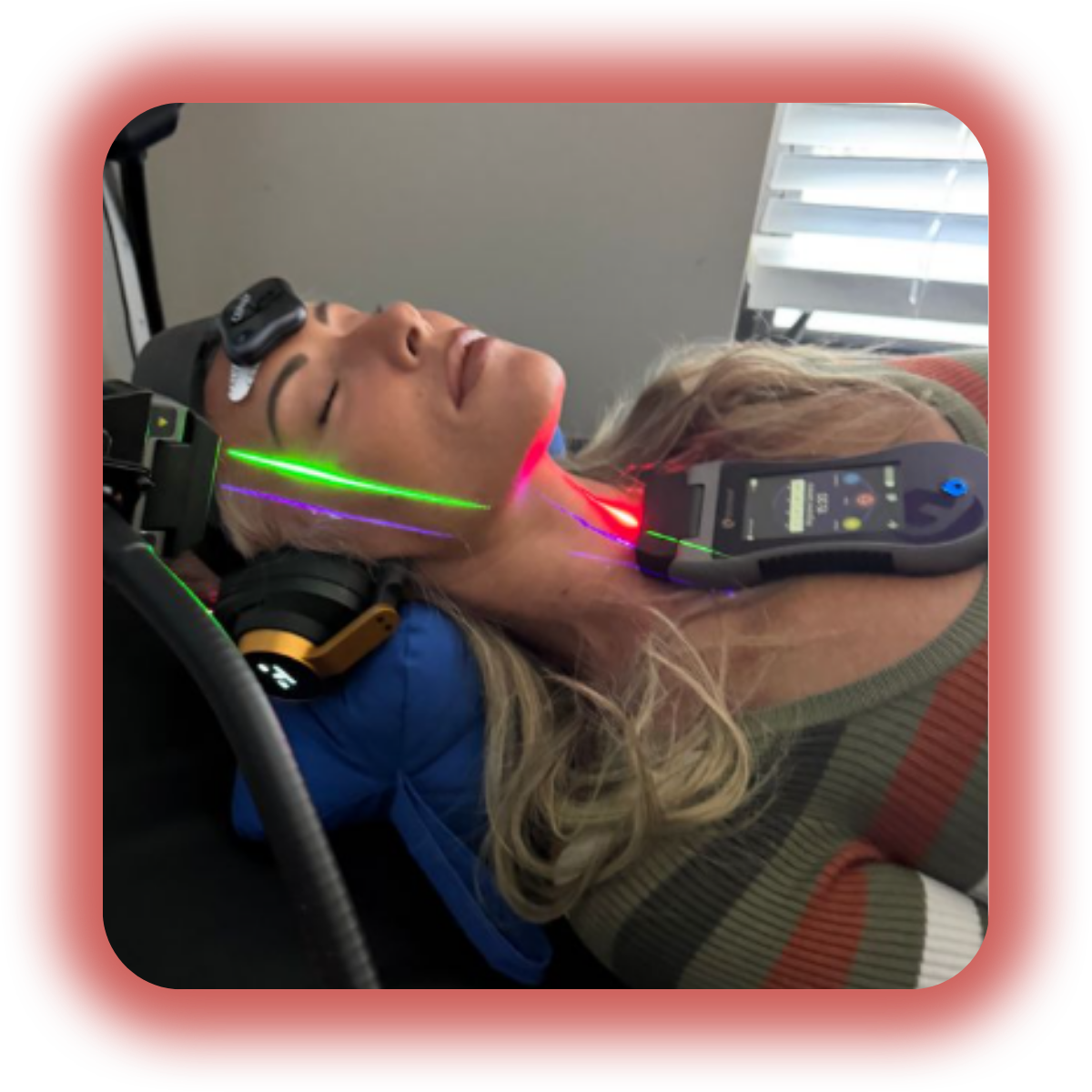
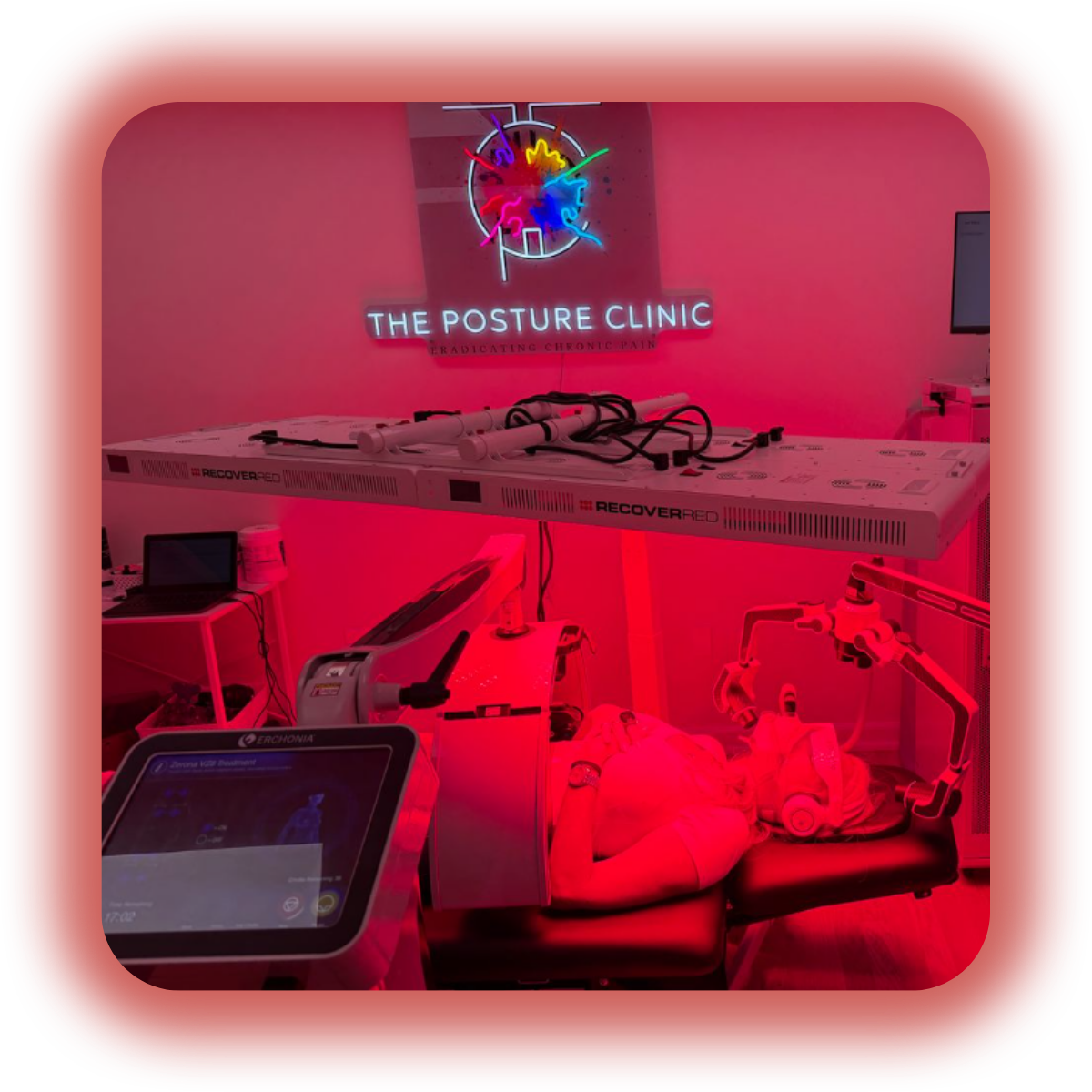
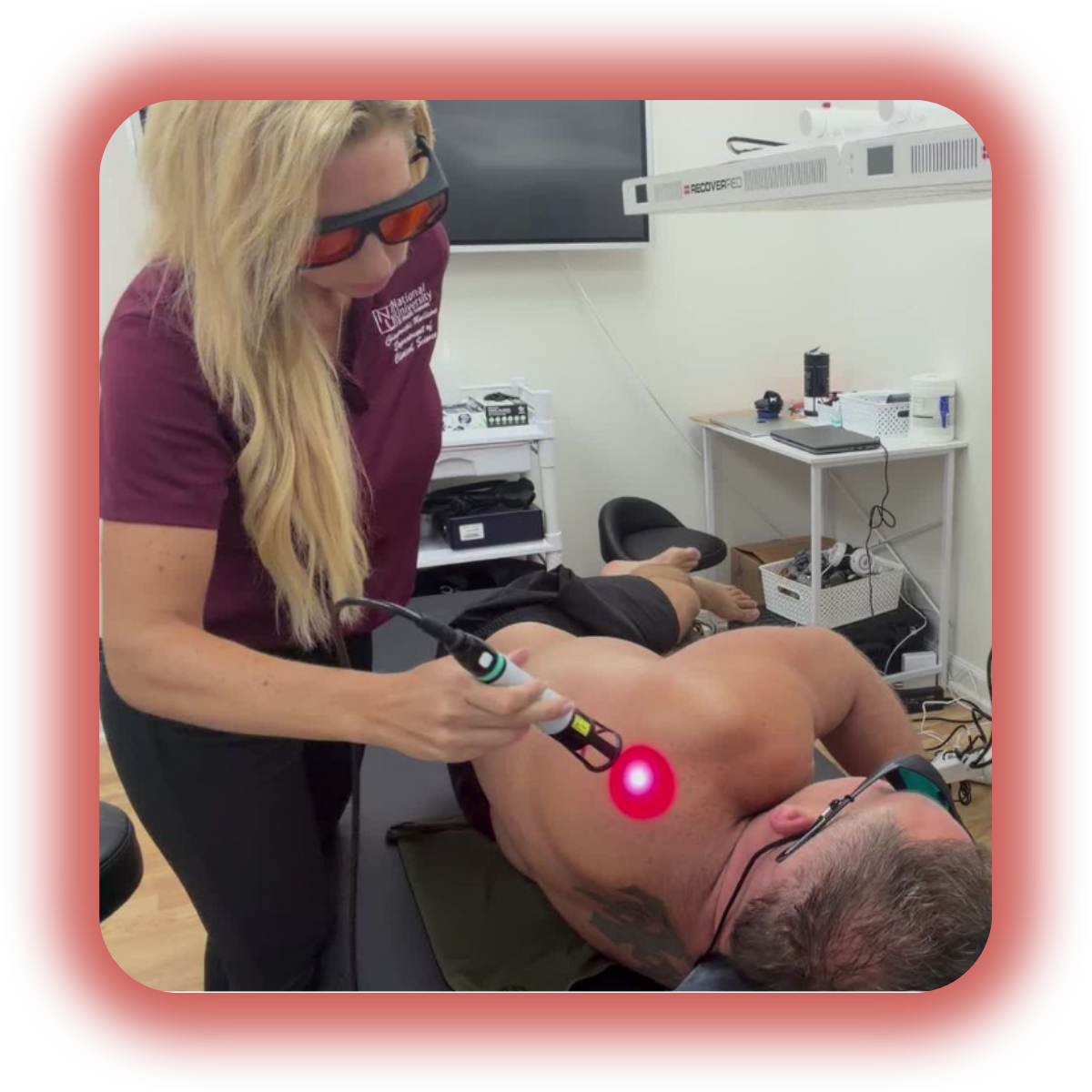
Erchonia low-level laser therapy · drops inflammation at the cellular level, FDA-cleared for chronic pain
-
Neubie electrical stimulation · direct current that shuts down protective muscle guarding and reactivates dormant muscles
-
Vagal protocols · breathing, cold, and HRV-guided work to bring the parasympathetic nervous system back online
-
Targeted supplement and peptide protocols · evidence-based, dose-controlled, used to reduce systemic inflammation and accelerate tissue repair
-
Sleep restoration · circadian, light, and behavior protocols, because no nervous system calms while sleep is broken
- Diet and gut-axis work · the gut is the second brain, and chronic pain often rides on a inflamed gut lining
WHAT YOU FEEL
Most patients notice something changing in the first five to ten visits. Sleep, the constant edge, the intensity. This is usually when a patient starts to believe the program will work. This is when the patient first believes the program will work.
3 · Rebuild the structure
Posture is not vanity. Posture is the architecture pain depends on.
A nervous system that has been calmed will start to flare again if the body is loaded the same way that broke it in the first place. A forward head adds 10 pounds of effective load to the neck for every inch out of neutral. A collapsed pelvis pulls the spine into a chronic compensation curve. Tight hips drive the low back to compensate. Until we change the structure that is producing the strain, the pain has a home to come back to.
WHAT THIS PILLAR INCLUDES
-
12 Weeks to Better Posture · the structural rebuild that follows Pain Protocol
-
Multifidus retraining · the deep spinal stabilizers that go offline in chronic pain
-
Joint by joint mobility · ankle, hip, t-spine, shoulder, neck
-
Motion Guidance laser-targeted retraining · we project a laser on the body so the patient can see their own compensation pattern in real time
-
Loaded carries and core integration · the unsexy work that makes results stick
-
Daily home protocol · 8 to 15 minutes a day, prescribed, scaled, and tracked
4 · Retrain the brain
The brain is plastic. We use that.
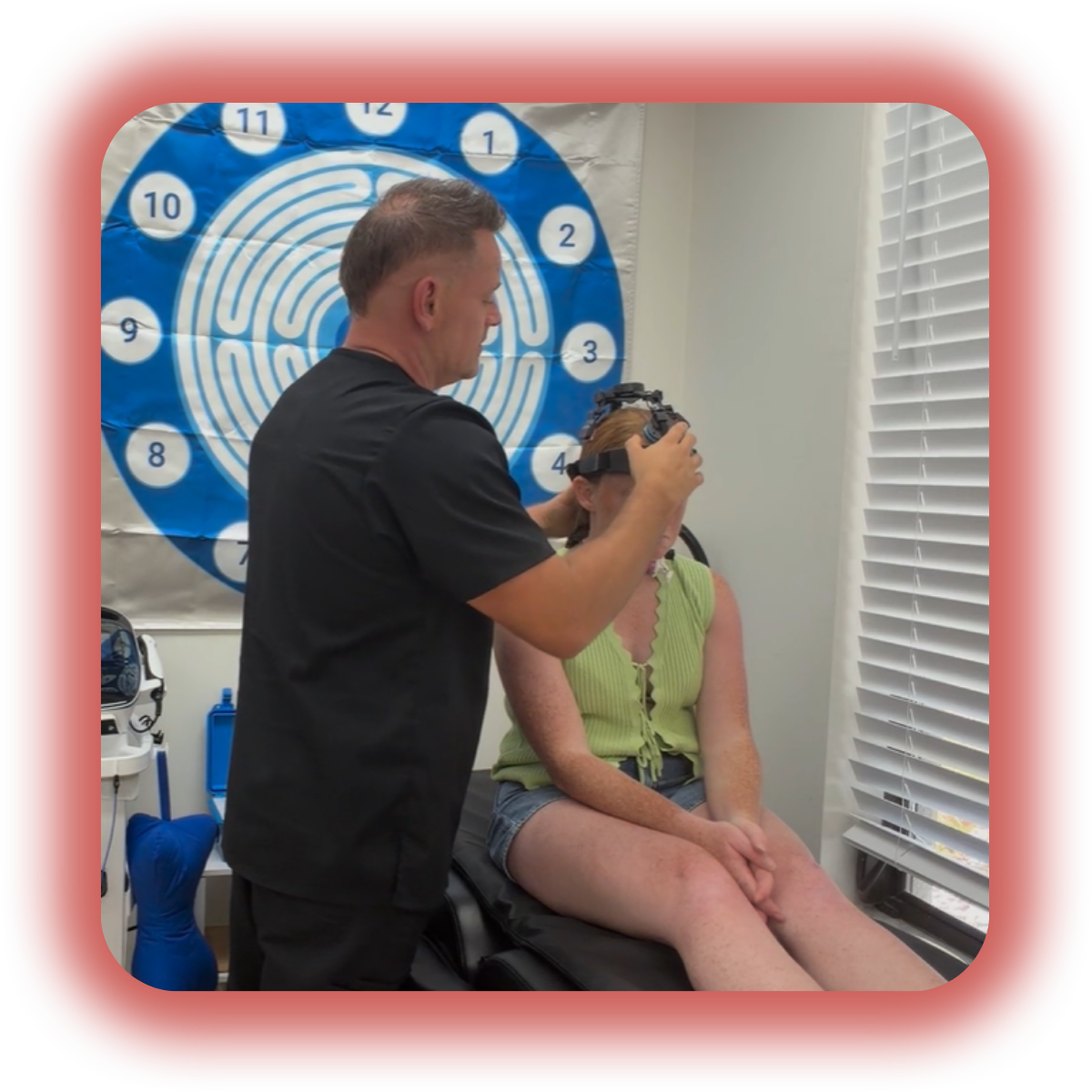
Chronic pain rewires the brain. Maps that should represent the hand or back become smudged and overlapping. The brain begins to interpret normal sensory input as threat. Movement becomes guarded. Confidence in the body collapses. We use functional neurology to remap the brain back to a safe and accurate model of the body.
TOOLS IN THE BRAIN-RETRAINING PILLAR
4 · Retrain the brain
The brain is plastic. We use that.
Chronic pain rewires the brain. Maps that should represent the hand or back become smudged and overlapping. The brain begins to interpret normal sensory input as threat. Movement becomes guarded. Confidence in the body collapses. We use functional neurology to remap the brain back to a safe and accurate model of the body.
5 · Enhance the environment
The result has to survive the rest of your life.
The desk you sit at, the way you sleep, the load you carry, the light you get. We change the inputs that produced the problem, so the work holds after discharge.
TOOLS IN THE BRAIN-RETRAINING PILLAR
-
qEEG-guided brain training · reading the resting brain and giving it specific feedback to renormalize problem patterns
-
WAVI cognitive and autonomic work · used at intake, mid-program, and finish
-
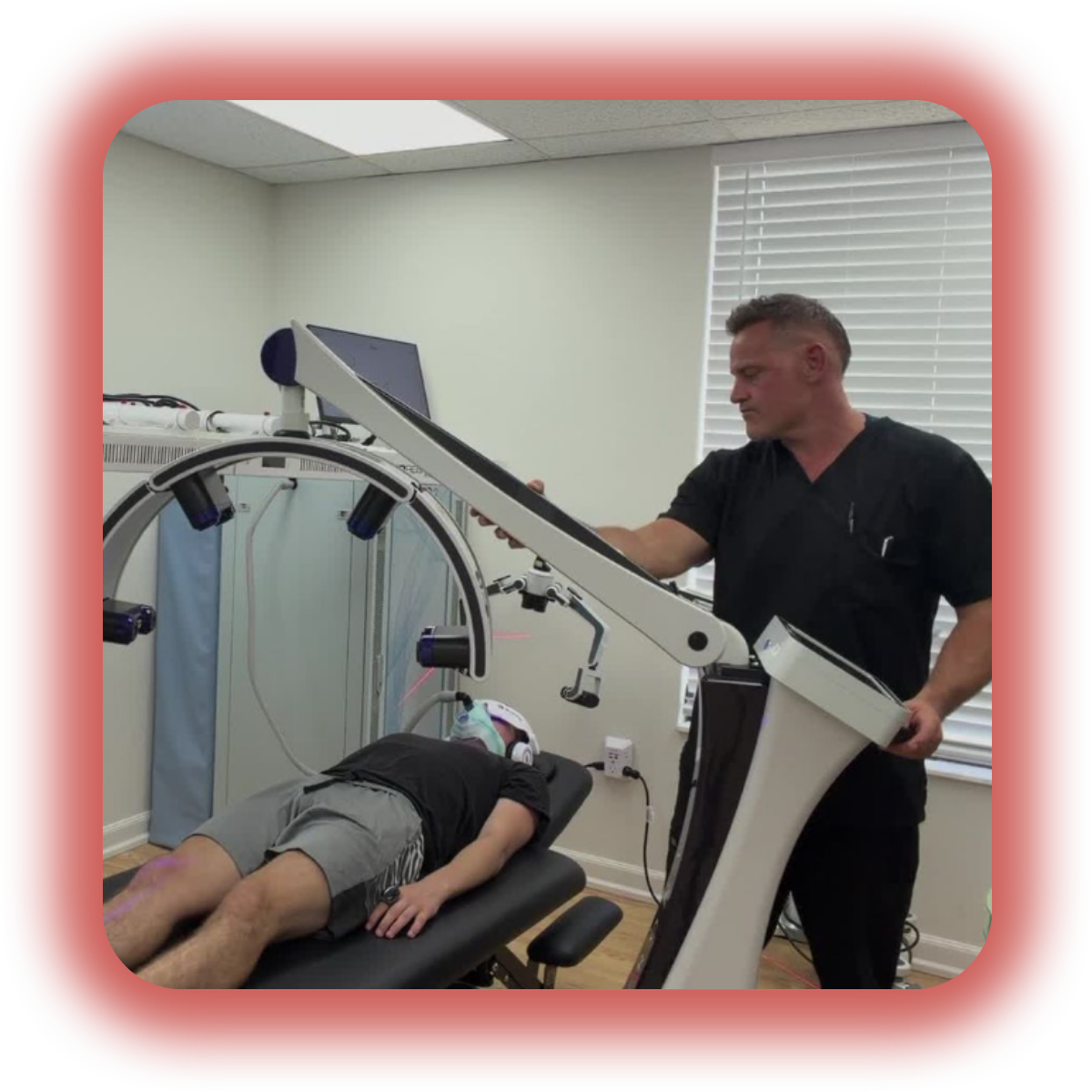
Vive Focus VR · virtual reality used for graded exposure to feared movements, vestibular retraining, and pain neuroscience education in an immersive environment
-
Vestibular and ocular work · the eyes and inner ear drive postural control, and hidden deficits in these systems can drive chronic neck pain, headache, and dizziness
-
Pain neuroscience education · the patient is taught how their own pain works, in plain language, because understanding alone reduces pain
-
Graded motor imagery, laterality work, mirror therapy · used selectively for CRPS, post-stroke, and severe central sensitization cases
WHY THIS MATTERS
A patient who finishes Pain Protocol and 12 Weeks to Better Posture without this pillar will often relapse under stress. Stress and emotion are central inputs to the pain system. We give the patient the tools to hold the result for life, not just for a season.
THE FIVE PILLARS
Calm the system. Align the structure. Retrain the brain. Rebuild the movement. Change the environment.
PILLAR 1
Eradicate the Pain
We map the brain, the spine, the neurology, the structure, and the inflammation. Every domain. Every patient.
PILLAR 2
Align the Structure
Atlas alignment as the keystone reset. ArthroStim adjustments. Complete Posture Correction Protocol. Posture-specific corrective exercises. We align the bones the brain has to work through.
PILLAR 3
Retrain the Brain
Vestibular drills, oculomotor work, hemispheric balancing, sensory remapping. We rebuild the operating system that runs your body.
PILLAR 4
Rebuild Function
Neubie targeted stim. Vibration plate work. Multifidus retraining. Motion Guidance Laser. We rebuild the strength and timing the pain stole from you.
PILLAR 5
Enhance the Environment
Sleep, nutrition, gut health, targeted supplementation, and the daily load your nervous system is carrying. You are in the clinic a few hours a week. You live in your environment the other 160. We build that side of the plan with you.
THE FIVE MEASUREMENTS
Progress is data. We refuse to call it anything else.
Every patient is measured five ways at intake. The same five ways at mid-program. The same five ways at finish. If a score does not move, the protocol changes. We do not run blind.
MEASUREMENT 1
IPS · Integrated Pain Score
The Pain Burden Index. A multi-domain assessment of what pain is actually costing you · its severity, how many regions of your body are involved, how much it interferes with work, sleep, and life, and how sensitized your nervous system has become. Scored 0 to 100. Higher is better. Most program patients enter in the Extreme or Severe band.
MEASUREMENT 2
FHS · Functional Health Score
The Structural Integrity Index. A measurement of how your body is aligned. Visual posture analysis from the front and the side, leg length analysis, and assessment of the C1 Atlas · the top vertebra, and the keystone your entire spine organizes around. Scored 0 to 100. Higher is better.
MEASUREMENT 3
MPS · Musculoskeletal Plasticity Score
The Tissue Health Index. A measurement of the tissue itself · muscle hypertonicity, trigger points, flexibility, and tissue extensibility. This is how well your muscle and connective tissue can lengthen, adapt, and recover. Scored 0 to 100. Higher is better.
MEASUREMENT 4
DMS · Dynamic Mobility Score
The Functional Capacity Index. A measurement of how your body moves under real conditions. Gait analysis, squat analysis, and range of motion at the cervical spine, lumbar spine, and ankle. Scored 0 to 100. Higher is better.
MEASUREMENT 5
NCS · Neuro Capacity Score
The Functional Neurology Screen. A full assessment of nervous system function · oculomotor, vestibular, cerebellar, sensorimotor, and cranial nerve testing. This is where we find the deficits that no MRI will show. Scored 0 to 100. Higher is better.
THE THREE PHASES
Pain off. Structure rebuilt. Brain retrained.
PHASE 1
Pain Protocol · 1 to 3 weeks
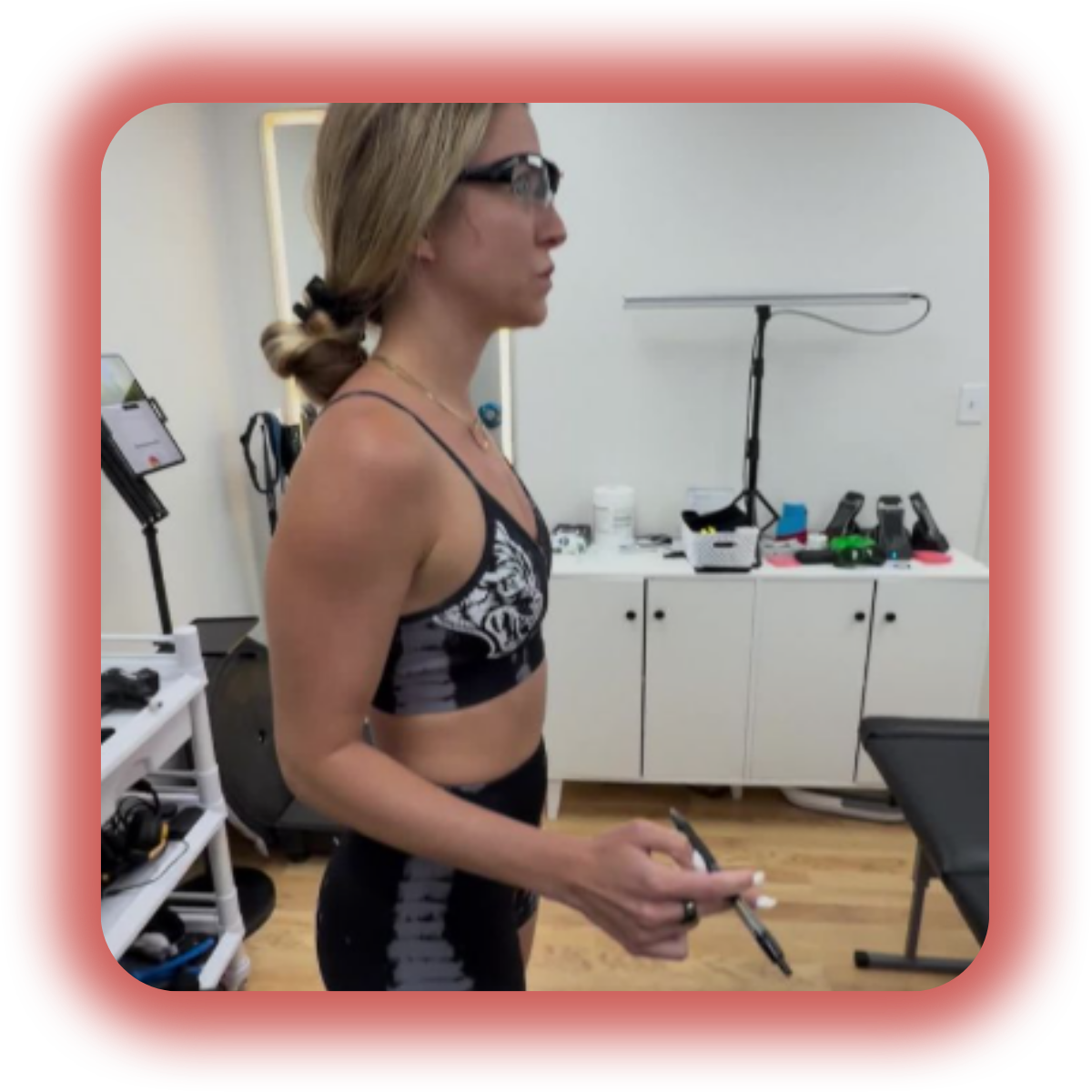
Near-daily in-clinic visits plus a daily home protocol. The goal is one thing · shut the alarm off. We use the calming pillar tools at high frequency. Most patients see a measurable IPS drop in the first week. By the end of Pain Protocol the patient is sleeping better, moving more, and the daily pain has dropped into a range where corrective work becomes possible.
- Frequency · near-daily in-clinic, plus daily home protocol
- Tools · Erchonia laser, Neubie, vagal work, supplement and peptide ramp, sleep protocol, anti-inflammatory diet
- Measurement · daily IPS check-in, sleep score, HRV trend
- Exit criteria · a measured rise in the Integrated Pain Score and patient can tolerate corrective load without flare
PHASE 2
12 Weeks to Better Posture
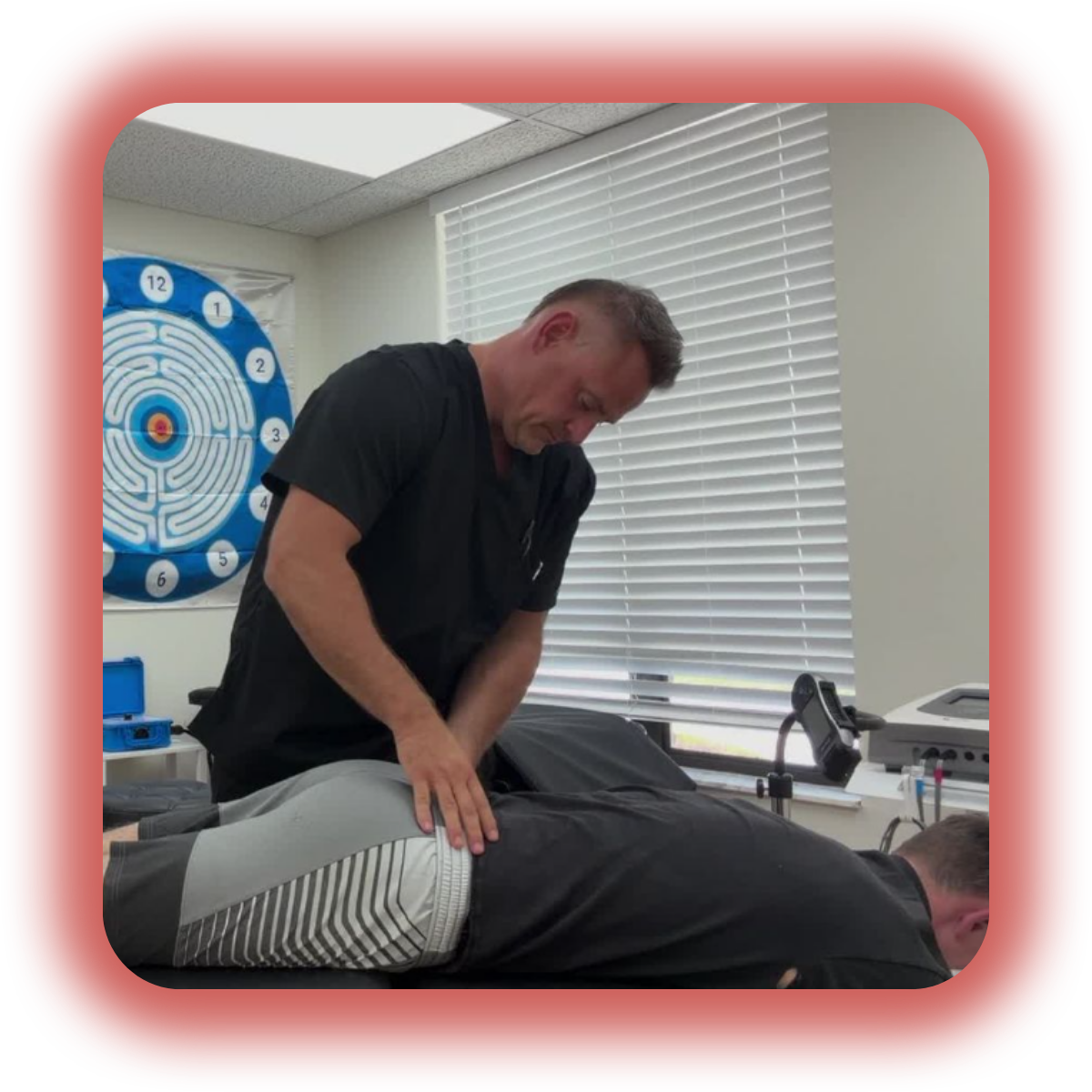
The structural rebuild. The patient transitions from daily calming work to a corrective and retraining schedule. The Motion Guidance laser, multifidus retraining, and joint by joint mobility become the spine of the week. Brain retraining tools layer in. By week 12 the patient looks different, moves different, and the postural cause of the original pain has been addressed.
- Frequency · 2 to 3 in-clinic visits per week + daily 8 to 15 minute home protocol
- Tools · Motion Guidance, multifidus, joint by joint mobility, loaded carries, Vive VR, qEEG-guided brain training
- Measurement · full five-score remeasurement at week 4, week 8, week 12
- Exit criteria · IPS and FHS both above the thresholds set at your baseline re-exam, postural score in functional range, patient confident moving without guarding
PHASE 3
Longevity · optional, ongoing
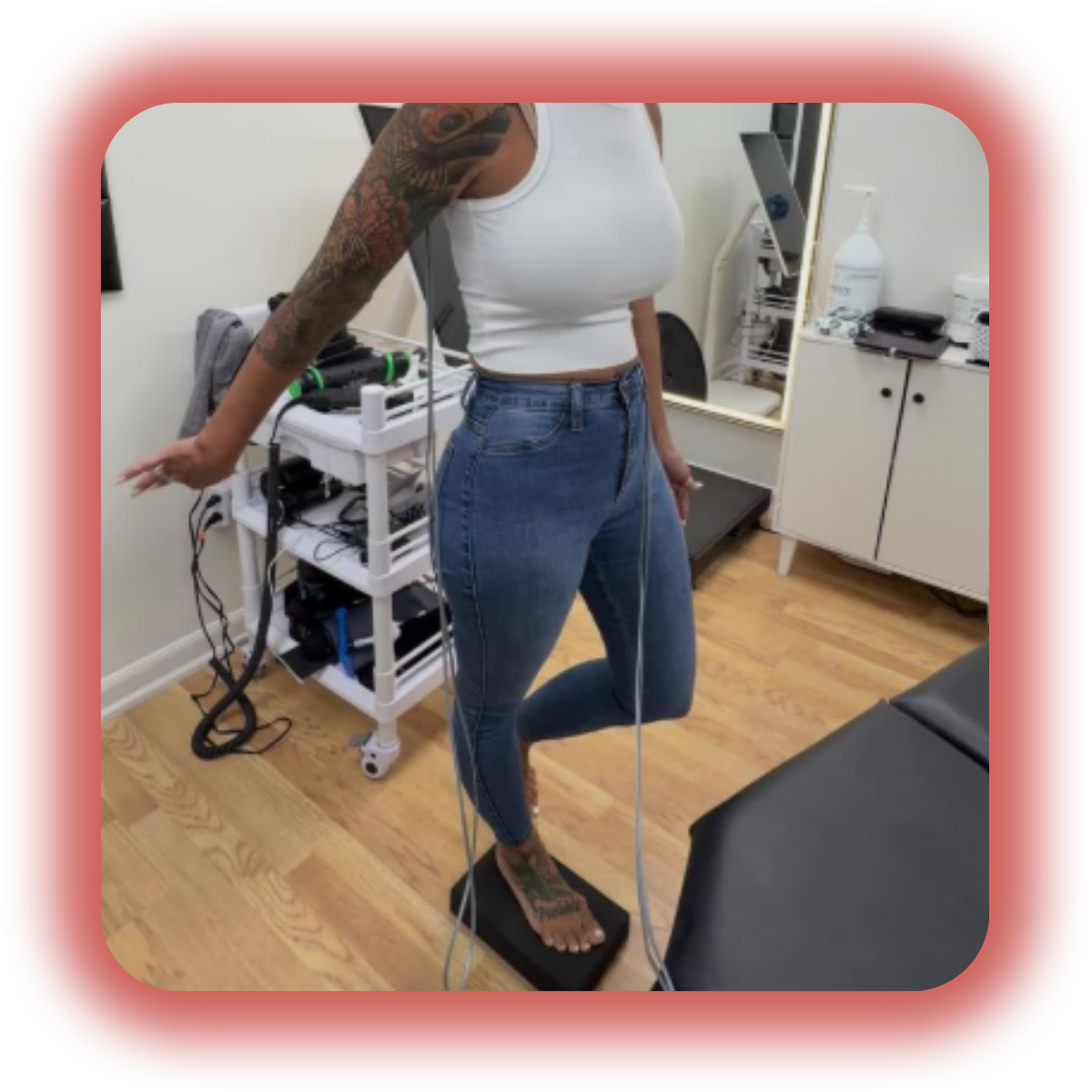
For patients who want to keep the gains permanent. A monthly cadence of remeasurement, brain training maintenance, and load progression. Most graduates choose this for the first year out. After that, they typically move to quarterly check-ins.
- Frequency · 1 to 2 visits per month
- Tools · maintenance brain training, load progression, periodic full remeasurement
- Measurement · quarterly full five-score remeasurement
- Exit criteria · none. This is the off-ramp the rest of the system never gave you.
A TYPICAL WEEK
What treatment actually looks like, hour by hour.
No surprises. Every patient gets a printed weekly schedule at the start of each phase, with daily home protocol on the same page.
PAIN PROTOCOL WEEK (SAMPLE)
- Monday · in-clinic visit + daily home protocol. Erchonia laser, Neubie, vagal protocol, supplement check
- Tuesday · in-clinic visit + daily home protocol. Laser, Neubie, breathing drills, sleep tracking
- Wednesday · in-clinic visit + daily home protocol. Laser, Neubie, brain retraining intro, IPS check
- Thursday · in-clinic visit + daily home protocol. Tools calibrated to where the patient is that day
- Friday · in-clinic visit + daily home protocol. Full end-of-week recalibration, doctor review, protocol adjustment
- Saturday · home protocol, anti-inflammatory food and sleep priority
- Sunday · home protocol, recovery, sleep priority
12 WEEKS TO BETTER POSTURE WEEK (SAMPLE)
- Monday · 60 minute in-clinic. Motion Guidance laser session, corrective load, brain training block
- Tuesday · home protocol (8 to 15 minutes, prescribed)
- Wednesday · 60 minute in-clinic. Multifidus retraining, t-spine work, vestibular if indicated
- Thursday · home protocol
- Friday · 60 minute in-clinic. Loaded carries, integration, weekly progress review
- Saturday and Sunday · home protocol, recovery
CONDITIONS WE TREAT
The 13 patterns we see most often.
We do not treat conditions. We treat drivers. But these are the diagnoses our program patients arrive with most often, and the patterns we have built deep protocols for.
-
Failed back surgery syndrome · the patient who has had one or more spinal surgeries and is still in pain
-
Chronic low back pain · more than 6 months, no clear surgical answer
-
Chronic neck pain and cervicogenic headache
-
Sciatica and radiculopathy that has not resolved with injections or PT
-
Fibromyalgia and widespread central sensitization
-
Chronic hip pain · pre- or post-replacement, FAI, glute amnesia patterns
-
Peripheral neuropathy · diabetic, chemotherapy-induced, or idiopathic
-
Complex Regional Pain Syndrome · CRPS Type 1 and Type 2
-
Recurring sports injury that will not stay healed
-
Motor vehicle accident chronic pain · whiplash, TBI, axial pain
-
SI joint dysfunction and chronic pelvic pain
-
Migraine and chronic tension headache
- TMJ, jaw, and orofacial pain with cervical contribution
READY TO BEGIN
You have read the program. Now apply for the interview.
We only accept a few new patients each month. The first step is a 30 minute Patient Interview by phone or video with our intake team. There is no commitment beyond a refundable deposit, and you get our decision on the call · not two business days later. By the end of the thirty minutes you know where you stand.

(727) 233-5268
Clinic@PostureClinic.com
6425 53rd St N Ste 6, Pinellas Park, FL 33781
We don't manage chronic pain. We eradicate it.
The Posture Clinic, a chiropractic practice.
© The Posture Clinic 2026. All rights reserved.